
The Holiday Season Starts with a Scream: Is Your Brain Ready for the Ride?
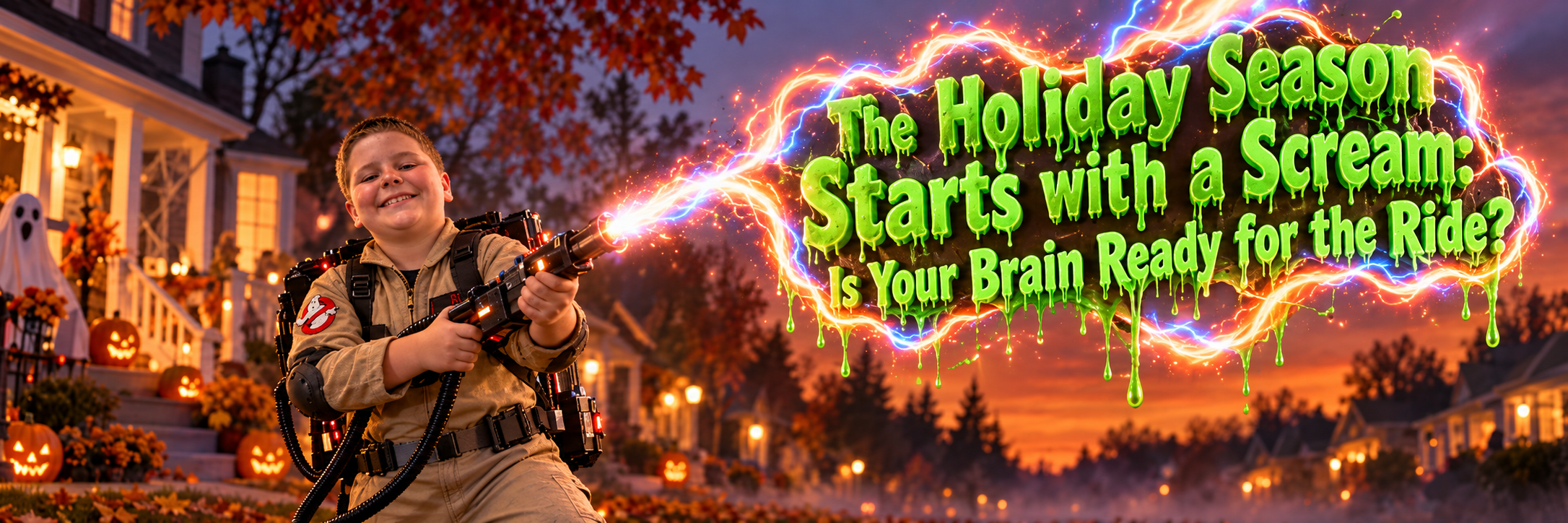
Halloween, pumpkin spicw, shorter days, and the surprising mental demands of having fun.
Some people say the holiday season begins at Thanksgiving. I've never seen it that way.
For me, Halloween is the unofficial opening ceremony.
Think about it. Halloween kicks things off with costumes, parties, friends, and a little harmless mischief. Then come Thanksgiving and Christmas, the two big family holidays. And finally, New Year's Eve closes everything out with another round of parties, celebrations, and staying up way too late.
It's the holiday sandwich. Two family holidays tucked between two party holidays.
And Halloween is the first bite.
Of course, you can barely get through September without pumpkin spice taking over the planet. Coffee, cookies, candles, cereal—apparently, if you can put pumpkin spice in it, someone already has.
And don't even get me started on the stores. One aisle is full of skeletons and inflatable ghosts, while the next has Christmas trees and Santa Claus. We're still trying to figure out Halloween costumes, and the retail world is already wishing us a Merry Christmas.
But underneath all the decorations, excitement, and seasonal madness, something else is happening.
Our routines are changing. The days are getting shorter. Social calendars are filling up. And whether we realize it or not, our brains are adapting to a whole new rhythm.
When Having Fun Starts Feeling Like Work
Halloween is supposed to be fun. And for most of us, it is.
But think about everything that goes into it.
What are you going to be for Halloween? Are you making a costume or buying one? What are your friends wearing? Which party are you going to? Are the kids trick-or-treating with friends? Who's driving? Who's decorating? And why does that one costume you ordered online look absolutely nothing like the picture?
Before the first piece of candy is handed out, you've already made dozens of decisions.
For kids and teenagers, Halloween brings its own kind of pressure. There's the excitement of dressing up, but also the worry about fitting in, coordinating plans with friends, and navigating crowded parties or noisy haunted houses.
Adults aren't immune, either. We're managing schedules, making plans, decorating, shopping, and trying to squeeze everything into an already busy week.
Even when the plans are exciting, organizing them still takes mental energy.
That's where something interesting happens.
We tend to think of stress as something negative—deadlines, arguments, bills, or responsibilities we'd rather avoid.
But excitement also activates our bodies and demands attention. Anticipation, social interaction, loud environments, and constant activity can all require mental effort, even when we're enjoying ourselves.
And sometimes, the things we look forward to most are the very things that leave us exhausted afterward.
You Can Love the Party and Still Need a Break
Picture two people at the same Halloween party.
The music is loud. Everyone's dressed up. People are laughing, talking, dancing, and moving from one conversation to another.
One person is in their element. They're energized by the crowd and could probably keep going until sunrise.
The other person is having just as much fun. They're laughing, enjoying their friends, and genuinely happy to be there.
But after a couple of hours, they're ready to go home, change into comfortable clothes, and sit somewhere quiet.
Neither person necessarily enjoyed the party more.
They just have different needs when it comes to stimulation and recovery.
The same thing happens with kids. A child can spend all week counting down to Halloween, have an incredible time trick-or-treating, and then come home completely overwhelmed.
After an evening of excitement, costumes, flashing lights, sugar, noise, and social interaction, a meltdown or sudden exhaustion might not mean the night went badly.
It may simply mean they've reached their limit for the day.
Recognizing that difference matters.
You don't have to avoid exciting experiences. Sometimes you just need to make room to recover from them.
And Then Fall Changes the Rules
As if Halloween weren't enough, Mother Nature has a few changes of her own planned.
The temperatures shift. The sunlight disappears a little earlier each evening. Mornings start feeling different, and suddenly that afternoon walk doesn't have quite as much daylight as it did a month ago.
And this year, there's one more trick waiting immediately after Halloween.
Daylight Saving Time ends Sunday, November 1, 2026—the morning after Halloween.
At 2 a.m., the clocks fall back one hour.
On paper, we gain an extra hour of sleep. Sounds like a pretty good deal, right?
Except our brains and bodies don't operate according to the clock on the microwave.
Our internal body clocks, known as circadian rhythms, respond to light and darkness. They help regulate when we feel awake, when we become sleepy, and how our energy changes throughout the day.
When the clocks change, our daily schedules and the timing of sunlight shift relative to each other. Some people barely notice. Others experience temporary changes in sleep, alertness, or mood as they adjust.
And while we technically get an extra hour that Sunday morning, the earlier sunset can make the evenings feel dramatically shorter.
For people who are sensitive to changes in routine or daylight, the transition can take some getting used to.
Sometimes it's not one big stressful event that wears us down. It's a collection of little changes happening all at once.
Keeping the Fun Without Running on Empty
The good news is that enjoying the season doesn't require a perfectly organized calendar or unlimited mental energy.
Sometimes a few small adjustments make the difference between a memorable weekend and one that leaves everyone completely exhausted.
Make the easy decisions early. Costumes, party plans, transportation, and schedules are much easier to manage before everything becomes a last-minute emergency.
Leave room between activities. Not every weekend needs to be packed from morning until midnight. A little unscheduled time gives everyone a chance to recharge.
Recognize sensory overload. Loud music, crowds, flashing lights, and unfamiliar environments can be exciting and tiring at the same time. Taking a break is perfectly reasonable.
Protect your sleep routine. Late nights happen, especially during Halloween. Returning to a consistent sleep and wake schedule can help make the transition easier.
Get some daylight. Spending time outdoors, especially earlier in the day, can help support the body's natural sleep-wake rhythm as the seasons change.
And perhaps most importantly, remember that different people have different capacities for excitement, social interaction, and constant stimulation.
One person's perfect Halloween is a packed costume party.
Someone else's is a scary movie, a bowl of popcorn, and absolutely no plans to leave the couch.
Both count as celebrating.
Helping Your Brain Handle the Season
At Braintopia Neurofeedback Centers, we spend a lot of time talking about how the brain responds to everyday demands.
Focus, emotional regulation, mental fatigue, and the ability to settle after a busy day all influence how we experience the world around us.
Neurofeedback is a non-invasive training approach that uses real-time feedback from brain activity to provide opportunities to practice self-regulation. For people exploring additional ways to support their overall well-being, it offers another option to consider alongside healthy routines and other forms of care.
The goal isn't to eliminate every stressful moment or turn every busy day into an effortless one.
It's about understanding how we respond to everyday demands, recognizing when we need recovery, and building habits that allow us to enjoy the experiences that matter most.
Let the Holiday Season Begin
So bring on the costumes, the pumpkins, the haunted houses, and yes, even the pumpkin spice everything.
Halloween is just the beginning of a season filled with gatherings, celebrations, traditions, and plenty of opportunities to make memories.
There will be busy weekends, late nights, changing schedules, and probably a few moments when everything feels like a little too much.
That's part of life.
Just remember: You can love the excitement and still need a little quiet.
And if you find yourself needing a break from all the Halloween madness, there's absolutely nothing wrong with turning off the porch light, putting your feet up, and enjoying a piece of that candy you supposedly bought for the trick-or-treaters.
After all, it's a long way from Halloween to New Year's Eve.
You might as well pace yourself.
Curious About Neurofeedback?
If managing stress, mental fatigue, or everyday demands has become challenging, Braintopia Neurofeedback Centers can help you learn more about neurofeedback training and whether it may fit into your overall wellness plan.
Learn More About Braintopia Neurofeedback Centers
No pressure—just a conversation about whether it's right for you.
