
The Lights Are On. Their Brains Are Too. (And So Are the Parents’)
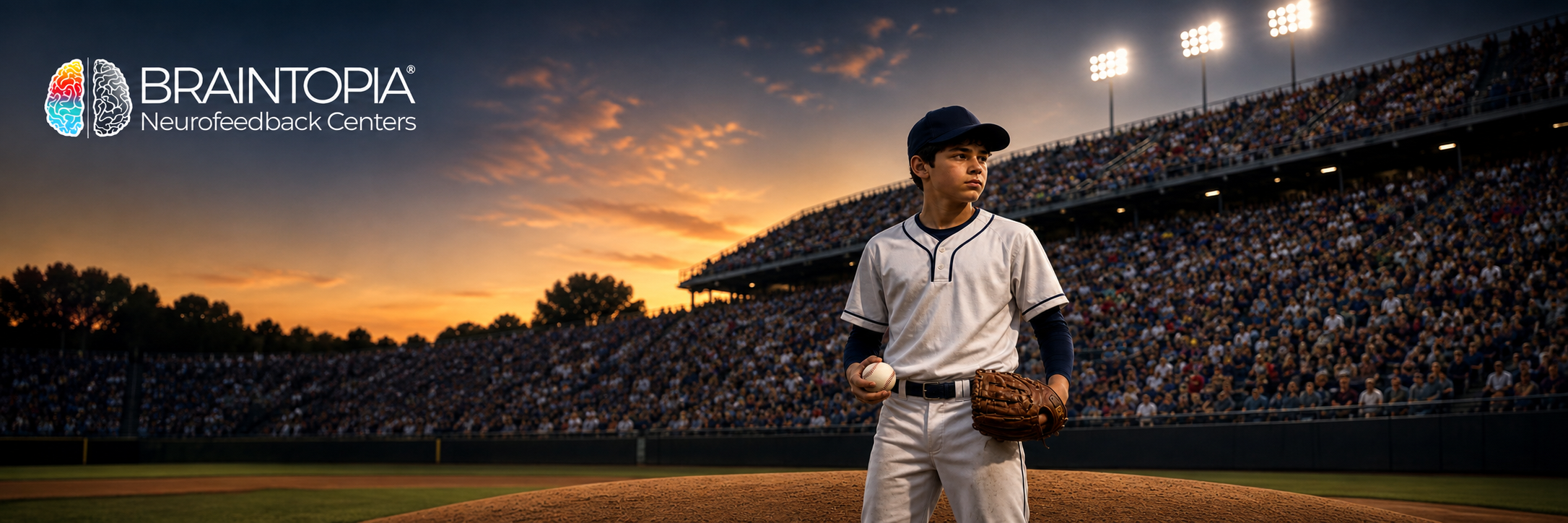
Every August, the Little League World Series puts 11- and 12-year-olds on a national stage. Cameras. Crowds. Instant replay. One bad pitch or bobbled grounder, and millions see it.
These young athletes spend years training their bodies to field, hit, and throw. What most are never taught is how to handle the sudden spike in stress when the pressure hits.
Under pressure, a developing brain does what it is wired to do: narrow attention, flood the body with stress hormones, and lock into self-doubt. That reaction can make it harder to stay calm, reset after a mistake, or get a good night's sleep before a big game.
And parents feel every second of it.
Watching your child perform under a microscope brings its own form of stress. You hold your breath on every play and worry about how they will process a public error. Many parents leave the stands feeling more emotionally drained than their kids, and that tension often follows the family home.
This is where managing the mental side of sports moves beyond "mental toughness" and becomes neurofeedback brain training for athletes of all ages and their families.
How Neurofeedback Supports Athletes (Youth and Adult)
Neurofeedback gives the brain real-time data about its own neural activity, helping athletes learn self-regulation. Key benefits include:
Focus Under Pressure: Helps prevent the brain from getting overwhelmed during high-stakes moments.
Faster Recovery: Teaches the mind to reset quickly after an error instead of spiraling into frustration.
Optimal Nervous System Regulation: Keeps the body loose, calm, and ready to react fast.
Improved Sleep Quality: Promotes restful sleep before major tournaments or competition days.
Regulating Stress for the Entire Family
The benefits extend directly to parents as well. When a parent’s nervous system is grounded, they show up calmer on the drive home, whether navigating a tough loss or managing the sensory overload of a big win. Kids pick up on that emotional stability.
Research indicates that neurofeedback can improve attention, emotional regulation, reaction time, and sports performance anxiety in athletes. While professional and adult competitors frequently rely on these techniques, the exact same principles apply to a 12-year-old on the pitcher's mound and the parents watching from the bleachers.
At Braintopia, we work with athletes at every stage of life. From adults training for high-level competition to youth players in travel ball, school sports, and local leagues, our goal is to help athletes quiet the mental noise and perform at their best. When both the athlete and the parent can stay regulated, the whole family handles the natural highs and lows of competitive sports with greater ease.
Ready to Help Your Athlete Thrive?
Whether you are an competitor looking for a mental edge or a parent helping a young athlete navigate game-day stress, neurofeedback can help.
Schedule a Free Brain Training Consultation at Braintopia
Frequently Asked Questions
Q: How does neurofeedback help with sports performance anxiety?
A: Neurofeedback acts as real-time biofeedback for the brain. It trains the central nervous system to regulate arousal, preventing the body’s "fight-or-flight" response from overwhelming the athlete during high-pressure moments. This improves focus, emotional stability, and spatial execution under stress.
Q: Is brain training effective for adult athletes as well as youth players?
A: Yes. Neurofeedback works across all age groups. Whether applied to a 12-year-old youth athlete dealing with tournament pressure or an adult competitor optimizing reaction times and stress recovery, the underlying mechanism of retraining neural pathways remains the same.
Q: What is the difference between sports psychology and neurofeedback?
A: Sports psychology typically focuses on cognitive strategies, such as visualization and self-talk, to manage mental blocks. Neurofeedback focuses on direct physiological conditioning by measuring brainwave activity in real time, teaching the brain how to automatically access balanced states of focus and calm without relying solely on willpower.
Q: How can parent stress impact a young athlete’s performance?
A: Children are highly sensitive to non-verbal emotional cues from parents and coaches. When a parent experiences game-day stress, their nervous system state can passively elevate the child's anxiety. Neurofeedback training for parents helps stabilize household stress dynamics, fostering a calmer environment before and after competition.
Q: How many neurofeedback sessions are needed to see results in sports performance?
A: While initial shifts in focus and sleep quality can occur within the first few weeks, lasting neurological changes typically develop over a structured series of sessions. Individual plans vary based on baseline brain map evaluations and specific performance goals.
