
What Actually Happened on National Lazy Day
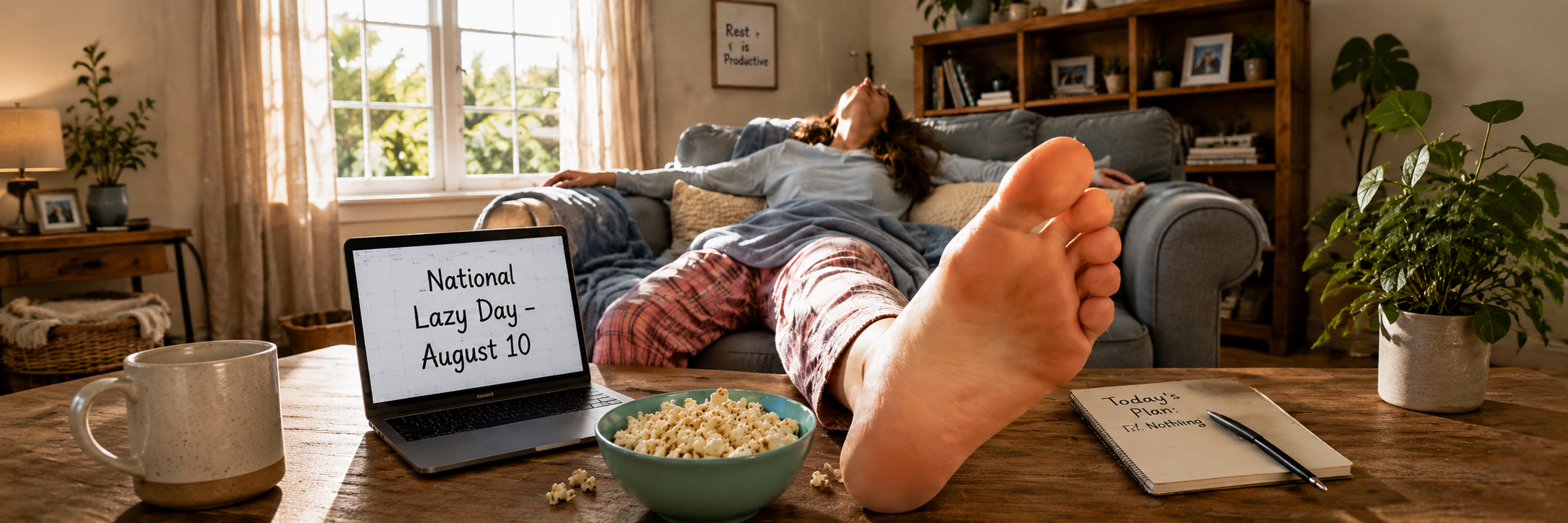
I spent National Lazy Day the way a lot of us probably did: working.
August 10 was officially National Lazy Day. National Relaxation Day followed a few days later on the 15th. Both sound great on a calendar. In real life, they rarely make it onto anyone’s actual schedule.
I noticed the date while researching and writing this. The irony was not lost on me. Instead of sitting around doing nothing, I was doing the opposite. Which, for a lot of us, is probably the point.
Parents, teachers, professionals, and anyone juggling more than one responsibility know how this goes. There is always another email, another errand, another person who needs something, another deadline that will not move just because the calendar says it is time to rest.
The tension is familiar: I know I should slow down. I also feel like I cannot afford to.
So rest keeps getting postponed. The body keeps going. The brain keeps scanning. And “doing nothing” starts to feel strangely uncomfortable.
That discomfort is real. A lot of us have gotten so used to constant input that unstructured time can feel restless or even a little anxious. We reach for the phone. We invent tasks. We fill the quiet because the quiet itself feels off.
But lower-stimulation time can be useful for the brain. When external demands drop, the mind has more room to wander, process, connect ideas, and recover from the constant pull of attention.
The problem is not that rest is unimportant. The problem is that, for many people, settling down has become harder.
Calm is not just a mood. It is also a state the nervous system has to be able to reach and maintain.
That is one of the things we work on at Braintopia.
Neurofeedback gives the brain real-time practice responding to its own activity and moving toward more regulated patterns. Over time, many clients report that it becomes easier to settle, the mind feels less noisy, sleep improves, and downtime starts to feel more restorative instead of agitating.
If you have been telling yourself you will rest when things calm down, and things never quite calm down, it might be worth looking at the other side of the equation: training the system that has to do the resting.
Frequently Asked Questions
Why does “doing nothing” sometimes feel uncomfortable? Many people have become so used to constant input that unstructured time can feel restless or even a little anxious. The nervous system is used to staying on high alert, so quiet can feel unfamiliar at first.
Is lower-stimulation time actually good for the brain? Yes. When external demands drop, the mind has more room to wander, process experiences, connect ideas, and recover. The brain was never designed to run at full output all day, every day.
Can neurofeedback help with the ability to settle and rest? Neurofeedback gives the brain real-time practice moving toward more regulated patterns. Many people report that it becomes easier to settle, the mind feels less noisy, sleep improves, and downtime starts to feel more restorative instead of agitating.
How is this different from just trying harder to relax? Willpower alone often is not enough when the nervous system is stuck in a high-alert mode. Neurofeedback works with the brain’s own activity so it can practice healthier patterns from the inside out.
Who is this approach for? Anyone who feels they are always “on,” has trouble winding down, struggles with sleep, or notices that quiet time feels uncomfortable rather than restful.
About Braintopia Braintopia Neurofeedback Centers help people train their brains toward better regulation, improved sleep, quieter mental states, and greater resilience. Using safe, non-invasive, drug-free neurofeedback, we support the brain in learning healthier patterns so recovery and calm become more accessible in everyday life.
Ready to explore whether this could help you? Call us at (972) 640-7022 or click the link below to learn more. We would be glad to talk with you about what that could look like.
