
Neurofeedback for Athletes: The Mental Edge | Braintopia
← Return Home | Newsletters
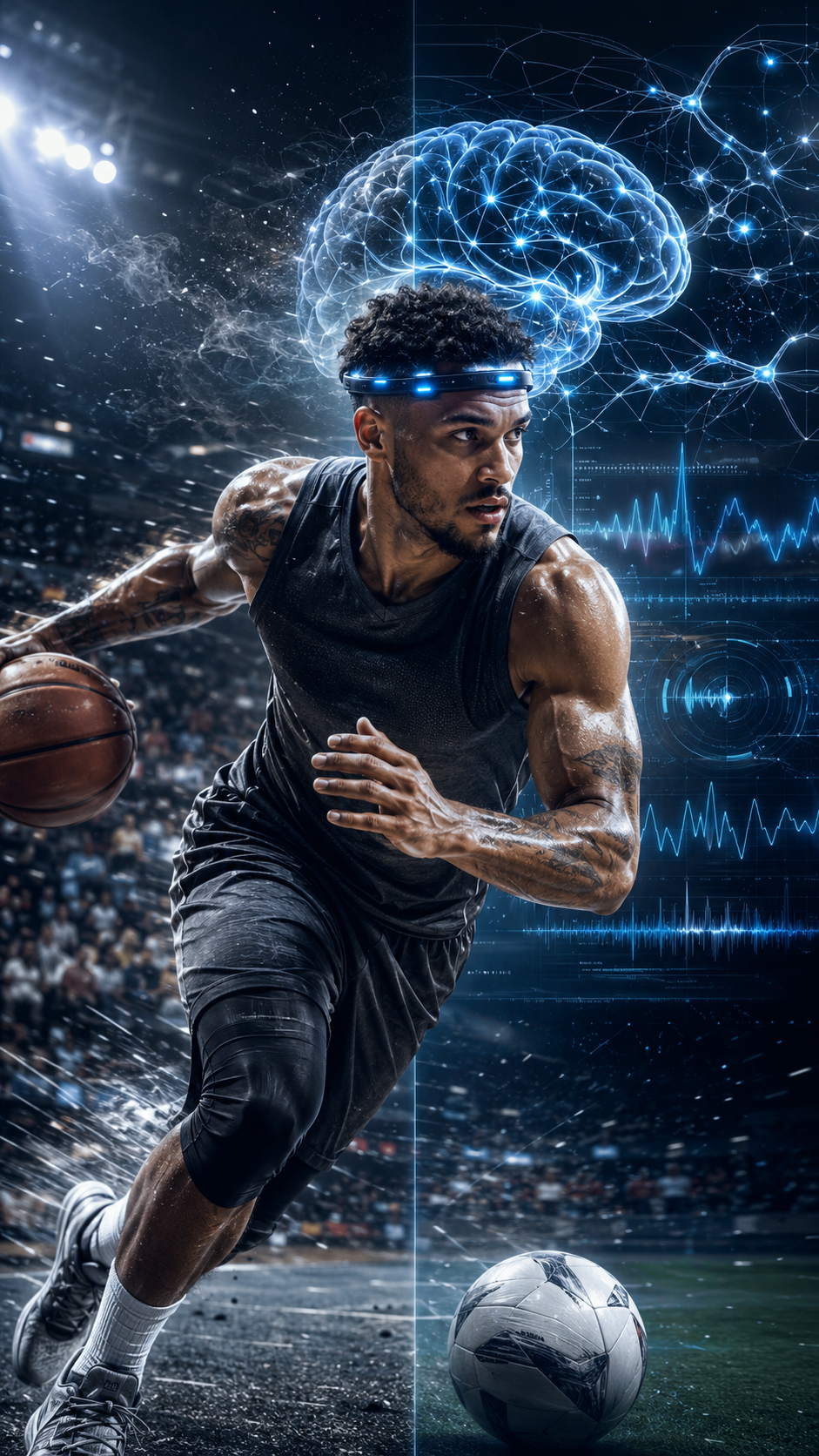
The Mental Edge: What Some Elite Athletes Are Training That Most Competitors Never Touch
It’s June, and while the NBA Finals and the FIFA World Cup dominate headlines, some of the world's most elite competitors are quietly training something most athletes completely ignore.
For athletes at every level, this time of year can bring tighter schedules, higher stakes, and more pressure. From high school players chasing scholarships and college athletes in playoffs, to semi-pro competitors, adult league players, and weekend athletes who still care deeply about performance, this season tests far more than just physical conditioning.
Most training focuses entirely on the body: speed, strength, conditioning, skill work, and physical recovery. But some elite athletes and championship-level teams have quietly explored something else: training the brain’s ability to stay focused, regulate under pressure, and recover after intense moments.
They are not claiming miracles. They are using neurofeedback for athletes as a targeted form of brain training designed to help the brain practice focus, regulation, and recovery—the same way competitors practice physical skills on the court or field.
What Actual Players Have Said About Neurofeedback
Tobias Harris, an NBA veteran who has played for multiple teams including the Philadelphia 76ers, has been highly open about his use of neurofeedback. He has shared that he does 45-minute sessions almost daily while on the road. During these sessions, he wears sensors and watches video that only continues playing if his brain stays in a focused state. Harris has noted that this training helps him return to a concentrated state more easily, both during high-stakes games and for active recovery afterward.
Chris Kaman, a former NBA All-Star who played for the Clippers and other franchises, publicly discussed his use of neurofeedback following an ESPN Outside the Lines segment in 2008. In an interview on Clippers.com, Kaman described how the training helped him pause before reacting:
“I can see if the end result is going to be good or bad, so now half the time I won’t do it where normally I would just jump right into something and not think twice about it.”
That split-second pause matters immensely because impulse control is a massive part of athletic performance. It is not just about playing harder; it is about staying aware, reading the moment, and making better decisions under pressure.
On the soccer side, the 2006 Italian National Team, which went on to win the FIFA World Cup, famously used an institutional sports psychology program called “The Mind Room.” It utilized neurofeedback as a cornerstone of their mental preparation. Several reports noted that it directly helped players maintain focus and composure during high-pressure moments, including intense penalty shootouts.
These are real athletes and teams competing at the absolute highest levels who chose to include brain training as part of their preparation. They haven’t promised it would magically transform anyone’s game; they’ve simply stated it became a vital, useful part of how they trained their focus, regulation, and recovery.
Why Brain Training Matters for Serious Competitors
Whether you’re playing for a college scholarship, competing in local playoffs, or showing up week after week in your competitive adult league, the mental side of performance is real. Most athletes understand physical fatigue, but far fewer think about mental fatigue until it actively starts affecting the game.
The Blind Spot in Traditional Training: Most athletes spend 99% of their time conditioning the body. Yet, the vast majority of performance breakdowns happen entirely between the ears.
The Fluster Effect: One bad play, missed shot, or unforced error lingers. The body may still be physically ready, but the brain is trapped replaying the mistake. That echo fragments your attention on the next possession, the next swing, the next serve, or the next defensive decision.
System Overload: Pre-game nerves are normal. But when they fail to settle, they drain physical energy before the game even starts. The athlete feels tense, rushed, distracted, or mentally scattered before the first whistle blows.
Late-Game Mental Fatigue: Late in a match or tournament, the brain has to keep processing complex spatial information quickly. Where is the defender? Where is the open space? What is the right decision under pressure? When focus starts to slip due to exhaustion, spatial awareness and decision-making slip right along with it.
This is where neurofeedback for athletes becomes relevant—not as a shortcut, but as a structured form of practice. It gives the nervous system targeted practice at staying calm, focused, and emotionally regulated when the external pressure is highest.
A Grounded Approach to Neurofeedback at Braintopia
At Braintopia, we don’t make lofty promises about results. Every brain is entirely unique, and what works for one athlete may not work the exact same way for another.
What we do offer is a clear, data-driven starting point: a qEEG brain map. This non-invasive recording gives us a baseline snapshot of your brainwave patterns, helping us see where your brain is already idling efficiently and where it might be working harder than expected under pressure.
From there, we can have an honest, hype-free conversation about whether neurofeedback training makes sense for your specific performance goals. Many athletes we work with are simply curious to see what’s actually happening between their ears when the game is on the line.
No hype. Just information.
If you’re interested in seeing what a brain map might reveal about your own patterns for focus, regulation, and recovery, we’d be happy to walk you through it. Click the link below to learn more!